|
|
|
To view this email as a web page, click here. |
|
|
|
|
|
|
LATEST FINDINGS
National Results: 2–3X Schoolwide High-Growth Learning with Opportunity Culture® Staffing Design
In October, we told you about North Carolina high-growth results, and now we’re pleased to share new findings from national data: Schools using updated Opportunity Culture® staffing design standards achieved, on average, two to three times the rate of schoolwide high-growth learning of other schools in the same states in 2024–25.
Additionally, new third-party research in one district found a full extra half-year of learning in reading and more than an extra third of a year in math for students between 2020 and 2024. Prior third-party research on three districts found more than an extra half-year of learning in math.
The nation’s largest staffing design initiative, Opportunity Culture® teaching teams reached over 275,000 students and 10,500 teachers in 2025–26 alone, with 1,150 schools now implementing, creating, or planning to create their new staffing designs. From 2013, when the initiative began, through the current school year, Opportunity Culture® educators have received more than $120 million in pay supplements.
“Educators continue to help students learn far more in roles designed to support excellent instruction,” said Bryan C. Hassel, co-president of Public Impact®, which founded the Opportunity Culture® initiative. “We see variation based on adherence to design standards associated with stronger learning, and potentially due to other factors like curriculum focus. Most important, students are learning while educators are earning more.”
Opportunity Culture® staffing design affects both instruction and human resources by extending the reach of excellent teaching to more students, for more pay, within regular budgets—and with more time for team collaboration. Schools create Multi-Classroom Leader® teaching teams, which are led by a teacher with a record of high-growth student learning compared with others in the same state. |
|
|
 |
|
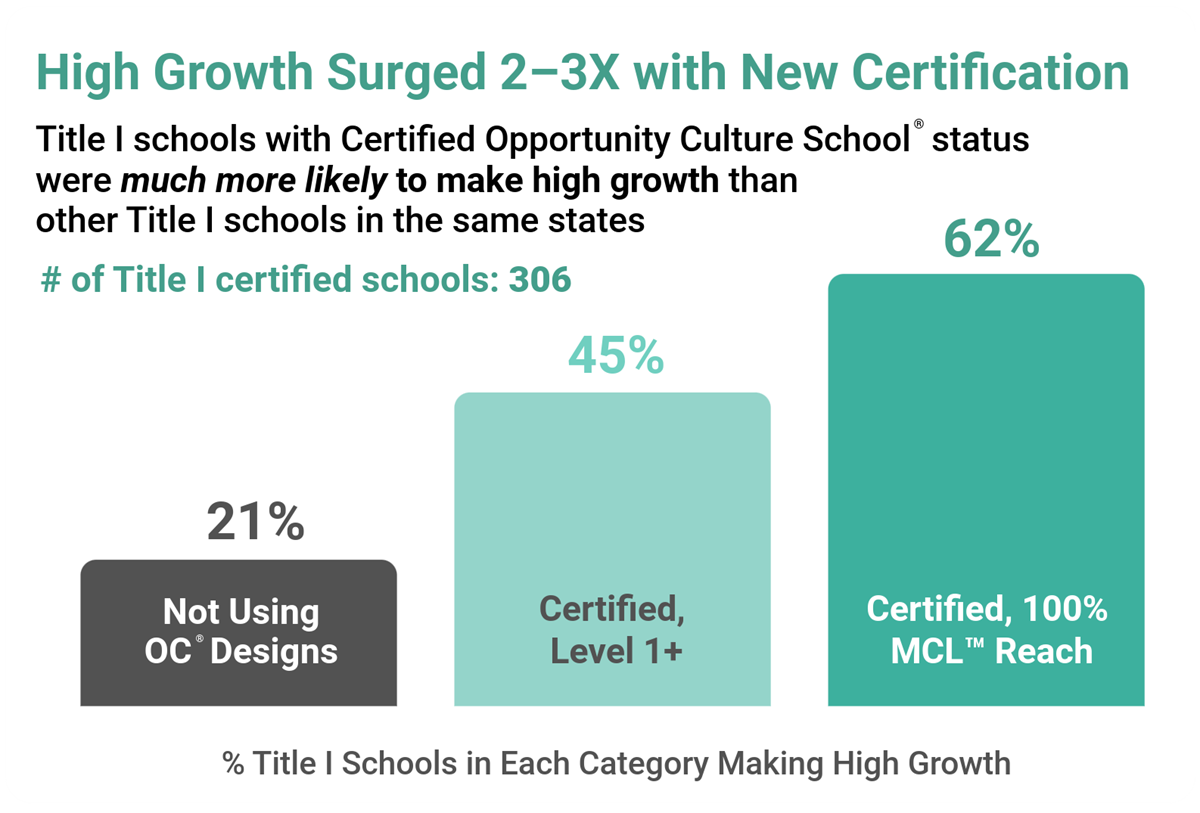
Two to three times the rate of schoolwide high-growth learning: According to publicly available data, high growth surged among certified schools in 2024–25, the first year that schools had access to new design standards all year and that educators had direct access to design and instructional tools online.
Among hundreds of schools, 45% of Title I schools attesting that they met Level 1 certification standards for Opportunity Culture® teams made high growth, compared with just 21% of Title I schools without the teams in the same states. Sixty-two percent produced high-growth learning schoolwide when they met the design standards and reached all of their students with the models. Increasing fidelity raised rates of high-growth learning even more.
Public Impact® correlated more than 50 design and implementation elements with schoolwide high-growth learning in hundreds of schools over more than a decade. Elements associated with high-growth schoolwide learning, or with higher satisfaction among educators, were included in the standards required for Certified Opportunity Culture School® status, though schools retain wide latitude to adopt additional design elements.
Schoolwide results varied by state. For example, North Carolina schools reached more students per school and were more likely to adhere to design standards. Texas schools reached fewer students per school and were less likely to adhere to data-driven standards, despite strong educator teams in many schools.
“Together, we and other researchers can illuminate what works, but only legislators and governors can give educators widespread access to design and instructional tools and ensure transparency about which districts and schools are reaching students with what works,” Hassel said.
Nearly an extra half-year of learning, on average: In 2013–16 and 2020–24: Students taught by teachers on Opportunity Culture® teams gained nearly an extra half-year of learning growth in math and reading, on average, in two third-party studies of four districts covering seven years. The first study was conducted by AIR and Brookings for the CALDER Center and the second by Texas Tech University. Students in the same schools but not taught by these teams learned almost an extra month more by their third year, according to the second study, an effect called “spillover.” All schools in these studies went through Opportunity Culture® design based on research—but before the creation of certification standards using initiative data.
READ MORE... |
|
|
|
|
PODCASTS
Future of Education Podcast
“Asking teachers to be superheroes and be all things to all students is an insane job description,” writes Michael Horn. After having Bryan Hassel and Ashley Williams of Public Impact® on his Future of Education podcast, Horn wrote, “The work Bryan and Ashley are doing speaks to a great solution—that also makes the job of teaching more motivating and viable.”
Listen now to the podcast, which left Horn with takeaways on teacher retention, professional development, and how policy and AI may shape what’s next.
LISTEN...
|
|
|
OPPORTUNITY CULTURE® AUDIO
From Our "Superintendents Speak" Series |
|
|
 |
|
Crystal Hill |
|
|
 |
|
Anthony Jackson |
|
 |
|
Michael Cormack |
|
|
|
For Charlotte-Mecklenburg Superintendent Crystal Hill, leading 185 schools and 141,000 students, success means providing deep support for a staff that now sees 60 percent of its teachers coming from a non-traditional background. The district, a pioneer in piloting Opportunity Culture® teaching team models and in quickly scaling up to many more schools, posted dramatic learning growth results in 2024–25. What has it taken to get there, and how will the district try to sustain those results? Dr. Hill shares her thoughts with host Sharon Kebschull Barrett and Public Impact® Co-President Bryan Hassel.
LISTEN.. |
|
|
|
Chatham County Superintendent Anthony Jackson, named as the 2020 North Carolina Superintendent of the Year while serving as superintendent of Vance County Schools, says districts—especially rural systems—can do far more if they focus investments on the capacity of their staff. A self-proclaimed “disciple” of the Opportunity Culture® initiative, he has led both districts to take calculated risks leading to strong learning outcomes for students.
In this podcast, Jackson discusses how Opportunity Culture® models’ flexibility combined with guardrails helped address the different problems each district faced. He notes some early success at the high school level, and he stresses the importance of scaling up implementation district-wide—-with urgency while at a predictable pace—to ensure that all students have access to excellent teaching, consistently
LISTEN... |
|
|
|
At Jackson Public Schools in Mississippi, Deputy Superintendent Michael Cormack brought big changes to student outcomes—no surprise after his leadership of the Barksdale Reading Institute, which sparked the state’s stunning literacy turnaround. Under Cormack, Jackson’s state accountability rating went from an F to a C, and in 2025, to strengthen the district’s literacy efforts, he introduced the combination of Opportunity Culture® teaching teams and a focus on high-quality instructional materials. Starting in five elementary schools—to be expanded to all 22 elementary schools in 2026–27—in pre-K through second grade, with a focus on literacy, the district worked with Public Impact®, which founded the Opportunity Culture® initiative, and Leading Educators, which provided literacy curriculum, coaching, and development for teachers.
We caught up with him just before he started his new job as CEO of KIPP Atlanta Schools, to get his reflections on the early difference this work is making in Jackson and thoughts for the future.
LISTEN... |
|
|
OPPORTUNITY CULTURE® BLOG |
|
|
|
|
|
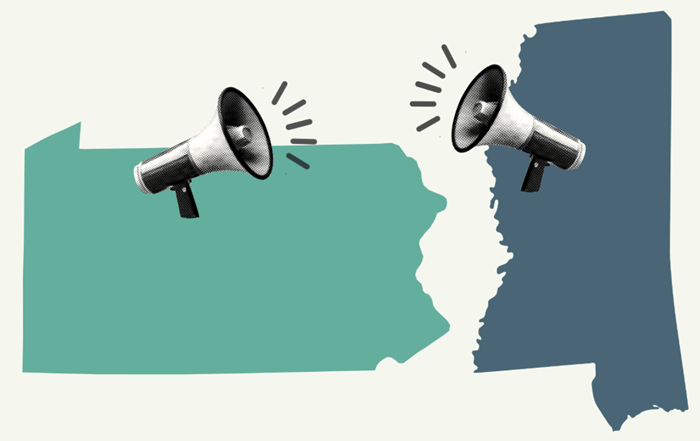
What would it take for states to listen to educators and support the talented people they already have in their schools? In Pennsylvania and Mississippi, two nonprofits recently sang the same tune: Support teachers and students through proven staffing redesign. Teach Plus PA and Mississippi First have issued calls to action by their states and districts that set an example for the nation. |
|
|
|
Like them, we believe in the talented teachers schools already have, and in the power of staffing redesign to dramatically improve school for both students and teachers.
But in both states—and throughout the country—details matter deeply. States should not provide funding for a “let all flowers bloom” approach. Students and teachers need staffing design with a track record of success, state monitoring of design fidelity, and continuous improvement using data to maintain strong outcomes.
READ MORE...and tune in later this week to Opportunity Culture® Audio to hear from leaders of Mississippi First and Teach Plus Mississippi, whose policy fellows recently issued their own report calling for legislative action on staffing design. |
|
|
The U.S. Department of Education recently released guidance encouraging states and school systems to use Title II and Title I funding (“Title funding”) to redesign schools for stronger learning and educator satisfaction using “strategic staffing.”
Opportunity Culture® school designs are proven, evidence-based staffing designs that boost student learning by 2–13 months each school year—while increasing teacher satisfaction and reducing vacancies and turnover. Educators earn more long-term—within recurring budgets.
Interested in adopting these designs and need funds to support transition costs? The new guidance from the U.S. Department of Education should help. In its February 9, 2026, “Dear Colleague” letter, the department reiterates that Title II-A funds, as well as Title I schoolwide funds, may be used to fund new school designs that get results by changing teacher roles, time use, and pay.
Read more about how and why SEAs and LEAs can use Title funds for Opportunity Culture® school redesign.
READ MORE...
|
|
|
|
|
CERTIFICATION
Welcome to Newly Certified Schools! |
|
|
|
Congratulations to the latest school to receive Certified Opportunity Culture School®, Level 2 status, and to the districts with the latest schools to get certified! As noted above, certified schools achieved far better student learning growth than uncertified schools.
|
|
|
|
|
|
|
|
|
|
|
|
|
The Public Impact® mission is to improve education dramatically for all students—especially students whose needs have not been well met. We are a team of professionals from many backgrounds, including former teachers and principals. We are researchers, thought leaders, tool builders, and on-the-ground consultants who work with leading education reformers. To learn more, please visit www.publicimpact.com.
This newsletter was made possible in part by supporters of the Opportunity Culture® initiative. The statements made and views expressed are solely the responsibility of Public Impact®.
© 2026 Public Impact®/Opportunity Culture®
|
|
Manage Preferences | Unsubscribe
Public Impact, 405 East Main Street, Carrboro, North Carolina 27510, United States |
|
|
|
|